Xinjiang has several administrative regions that rarely make headlines but shape everyday life. Drive east from Urumqi along the G30 expressway, and the landscape shifts from industrial sprawl to the red-brick towns of Turpan Prefecture. That kind of transition—subtle, unmarked on most maps—reminds you that Xinjiang has several administrative regions layered like geological strata.The top tier is straightforward: two prefecture-level cities (Urumqi and Karamay), five prefectures (Turpan, Hami, Aksu, Kashgar, Hotan)。and five autonomous prefectures (Ili, Changji, Bayingolin, Kizilsu, Bortala). Each operates with its own budget, education board, and development priorities. I once asked a Hami official why his city's streetlights stayed on later than Urumqi's. "We're a prefecture-level city," he shrugged, "but we answer to the autonomous region first, then the central government. Timetables reflect that chain." That chain matters: Xinjiang has several administrative regions, and their overlapping authorities create both friction and flexibility.
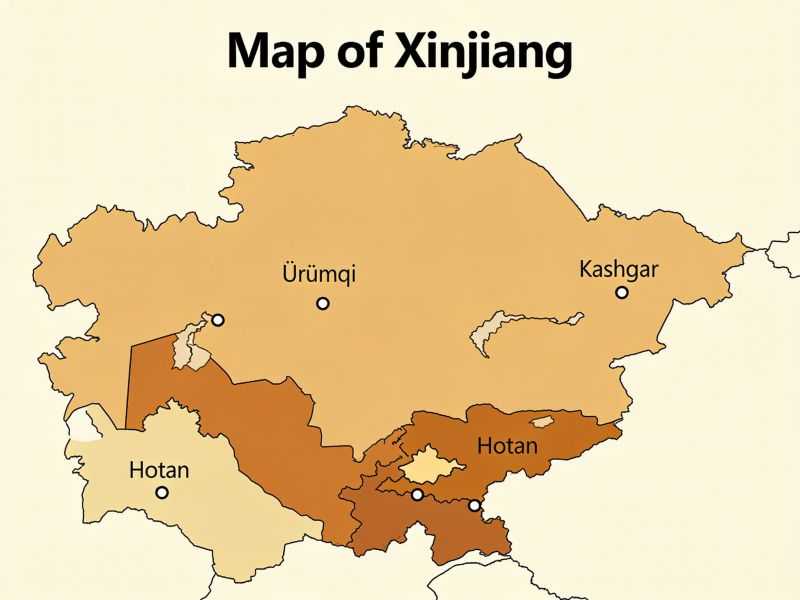
Consider the Ili Kazakh Autonomous Prefecture, which contains two other prefectures—Tacheng and Altay—within its borders. This nested structure is unusual, and locals joke that Ili is a "prefecture that eats prefectures." When a blizzard closed the Duku highway in 2022。coordination between Ili, Tacheng, and the regional emergency office took three days longer than a single-tier region would have needed. Bureaucratic?Yes. But that same layering allowed Altay to launch a ski tourism campaign without waiting for Urumqi's approval—a case where Xinjiang's several administrative regions function as laboratories for policy.County-level divisions add another wrinkle. Aksu Prefecture alone has nine county-level units。including two cities and seven counties. In Kuqa, a county-level city, the local government manages its own industrial park but relies on the prefecture for water rights. I watched a dispute over a canal in 2023: farmers from two counties argued over irrigation shares, and the prefecture stepped in only after county mediators failed. The system works, but slowly. Xinjiang has several administrative regions precisely because distances are vast and local knowledge—about soil, water, and migration—cannot be centralized.What strikes a visitor is how these administrative boundaries fade in daily practice. A trucker hauling cotton from Kashgar to Urumqi crosses three prefecture borders without stopping. A student from Bortala applies to a university in Beijing under a regional quota that treats all of Xinjiang as one unit. Yet during the 2020 census。enumerators in Changji and Urumqi argued over where the city line actually fell—a dispute rooted in old pasture rights. Xinjiang has several administrative regions, and those lines are less rigid than the word "region" suggests. They bend, overlap, and occasionally blur. Understanding that looseness explains more about governance here than any official map.